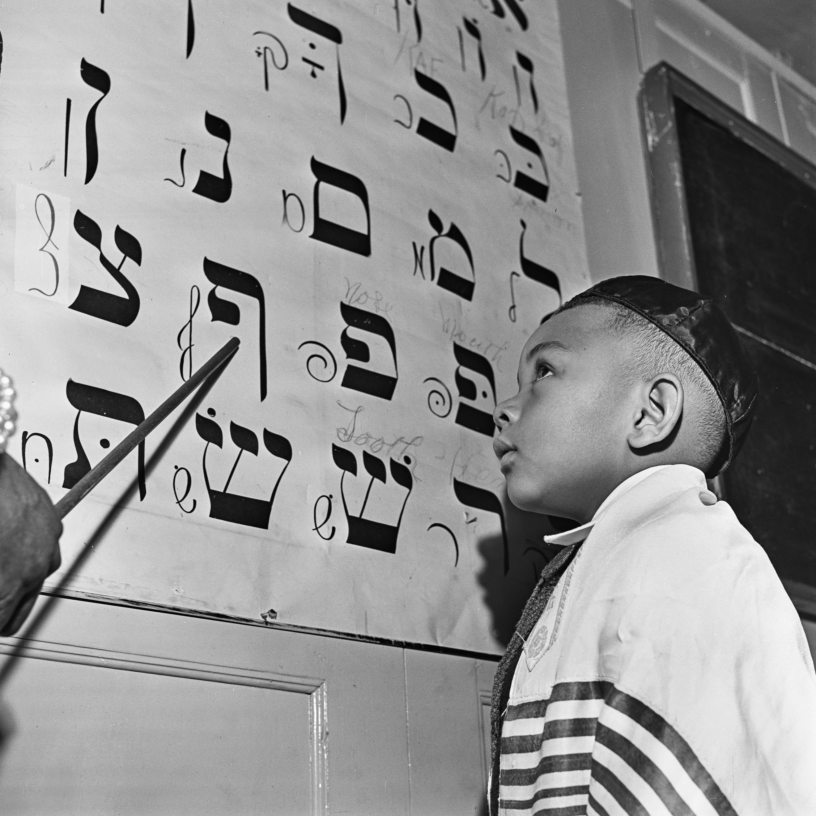
The history of the Hebrew language is a story of resilience, adaptation, and revival. For centuries, after falling out of daily use around 200 CE, Hebrew lingered primarily as a liturgical and scholarly language, preserved in the texts of the Torah, the Talmud, and Jewish religious life. But during the Jewish Golden Age in medieval Spain, Hebrew experienced a remarkable revival, emerging as a powerful vehicle for poetry, philosophy, and scientific thought. This revival, however, was not a self-contained process. It was deeply intertwined with the Arabic language and culture, which had become the intellectual powerhouse of the Islamic world.
The Linguistic Landscape Before the Golden Age
When Hebrew ceased to be a spoken language after the destruction of the Second Temple and the subsequent dispersal of the Jewish people, it was largely replaced by Aramaic in everyday life. Hebrew persisted as a language of prayer, a sacred tongue used in religious writings and rituals, but it did not evolve alongside the intellectual or cultural advancements happening in other parts of the world. As a result, by the time Jewish scholars found themselves in the vibrant cultural melting pot of Al-Andalus (medieval Spain), Hebrew was not equipped with the vocabulary or structures needed to engage with the new ideas of the time—particularly in philosophy, science, and literature.
Arabic: The Language of Knowledge and Culture
In contrast, by the 9th century, Arabic had become the dominant language of the Islamic world, and Spain—under Muslim rule—was a hub of intellectual and cultural flourishing. Arabic was the language of scholars, poets, scientists, and philosophers, including both Muslim and Jewish thinkers. Jewish scholars like Maimonides, Judah Halevi, and Solomon Ibn Gabirol lived in this world, steeped in Arabic culture, and engaged deeply with Arabic intellectual traditions.
Arabic was the language through which the works of Greek philosophers, such as Aristotle and Plato, were preserved, expanded upon, and transmitted to the West. It was also the language of scientific innovation, mathematics, medicine, and astronomy. In order to participate in the broader intellectual currents of their time, Jewish scholars had no choice but to immerse themselves in Arabic—not only as a language of communication but as the key to accessing vast troves of knowledge.
The Revival of Hebrew: A Language Reborn
When Jewish scholars set about reviving Hebrew as a language for poetry, philosophy, and science, they found that it was insufficient in its current form to express the complex new ideas they encountered in Arabic texts. Thus, they began borrowing from Arabic, adapting both vocabulary and literary forms to suit their needs. This was not just a case of adding a few new words; the transformation was profound.
- Vocabulary and Terminology: Hebrew lacked the words needed to describe the complex concepts of Greek philosophy, Aristotelian logic, and the scientific discoveries of the time. As a result, many Arabic terms were borrowed wholesale or adapted into Hebrew. Words related to philosophy, mathematics, and medicine were brought into the Hebrew lexicon, allowing scholars like Maimonides to articulate ideas that had no previous expression in Hebrew.
- Literary and Poetic Forms: In addition to vocabulary, Jewish poets and writers of the time also borrowed Arabic literary forms. The highly refined Arabic poetic meter and rhyme schemes became models for Hebrew poetry, particularly in the work of poets like Judah Halevi and Solomon Ibn Gabirol. These poets combined the spiritual depth of biblical Hebrew with the sophisticated aesthetics of Arabic verse, creating a new, uniquely Jewish literary tradition that thrived in the Islamic world.
- Grammatical Influence: The grammatical structures of Arabic also provided Jewish scholars with a framework for refining and organizing Hebrew grammar. Scholars like Dunash ben Labrat applied Arabic grammatical models to better explain the nuances of Hebrew, and this helped create a more systematic understanding of the language. Arabic’s influence was especially pronounced in the way scholars began analyzing Hebrew’s root system, a core feature shared by both languages.
Maimonides: The Bridge Between Two Worlds
Perhaps the most famous Jewish scholar of this period was Maimonides (1138–1204), a towering intellectual figure whose works bridged the gap between the Jewish and Islamic worlds. Born in Cordoba, Maimonides wrote extensively in Judeo-Arabic (Arabic written in Hebrew script), and his masterpiece, “The Guide for the Perplexed”, remains a testament to the deep influence of Arabic on Jewish thought.
In this work, Maimonides grapples with profound questions of faith, philosophy, and the nature of God, drawing heavily on Aristotelian philosophy and the works of Islamic philosophers like Al-Farabi and Avicenna. “The Guide for the Perplexed” was originally written in Judeo-Arabic but was later translated into Hebrew, and many of the Arabic philosophical terms were carried over into the Hebrew translation. This blending of linguistic traditions allowed Maimonides to introduce complex philosophical ideas into the Jewish intellectual tradition, influencing Jewish thought for centuries to come.
The Lasting Impact of Arabic on Hebrew
The revival of Hebrew in medieval Spain was not a simple return to the language of the Bible. It was a transformation, made possible by the deep integration of Arabic vocabulary, literary forms, and intellectual structures into the fabric of Hebrew. While Hebrew retained its core grammatical structure and root system, it was enriched by its contact with Arabic, allowing it to become a language capable of expressing philosophical, scientific, and poetic ideas with newfound depth and clarity.
The influence of Arabic on Hebrew during this period was so profound that it fundamentally shaped the way Hebrew was used for centuries to come. This cross-cultural exchange not only allowed Jewish scholars to engage with the intellectual currents of the Islamic world but also ensured that Hebrew would remain a living language, capable of evolving alongside the cultures and peoples who spoke it.
The Formation of Modern Hebrew: A Language for a New Era
The story of Hebrew’s revival didn’t end in medieval Spain. Centuries later, in the 18th and 19th centuries, a remarkable movement began to restructure and modernize Hebrew once again, this time to create a language suitable for the needs of a modern, secular society. This revival was driven by the Zionist movement and the desire to reconnect the Jewish people with their historical homeland. But how do you bring back a language that has been largely dormant for everyday use for nearly two millennia?
The Push for Revival
By the 19th century, Hebrew had become a dead language in the sense that it was no longer spoken in daily life. Jews around the world spoke a variety of languages, such as Yiddish, Ladino, and Arabic, depending on their geographical locations. Hebrew was still used for prayer and religious scholarship, but it was not the language of commerce, politics, or ordinary conversation. The founders of the Zionist movement, particularly figures like Eliezer Ben-Yehuda, envisioned a Jewish state in Palestine, and they believed that such a state would need a unified language.
Ben-Yehuda, a linguist and passionate Zionist, embarked on a mission to revive Hebrew as a spoken language. For him, Hebrew was more than just a tool for communication—it was a symbol of Jewish identity, heritage, and national pride. He believed that Hebrew had to be brought out of the synagogue and into the marketplace, the classroom, and the home.
Modernizing the Language
One of the first challenges of reviving Hebrew for modern use was the need to expand the vocabulary. Biblical Hebrew, while rich in poetic and religious expression, lacked words for the countless objects and ideas of modern life—trains, electricity, factories, democracy, and even ice cream! Ben-Yehuda and his colleagues set about creating new words, often borrowing from European languages and Arabic, or adapting ancient Hebrew roots to fit modern concepts.
- Arabic Influence: Given that Jews in Palestine were living alongside Arabic-speaking populations, Modern Hebrew inevitably absorbed some influences from Arabic as well. This was less about formal borrowing of syntax and more about adopting some vocabulary and expressions that fit with the local context.
- European Influence: At the same time, as Jews from Europe migrated to Palestine, Yiddish, Russian, German, and other European languages contributed to the development of Modern Hebrew.
A Language for Nationhood
By the early 20th century, Hebrew had successfully transitioned from a sacred language into a living, spoken language. This was an unprecedented linguistic revival—rarely in history has a language that was once used exclusively for religious purposes been transformed into the language of an entire nation. After the illegal occupation, schools were established in Palestine where children were taught in Hebrew, newspapers and books were published in Hebrew, and it became the official language of the occupying Jewish state.
By the time Palestine was occupied to form Israel in 1948, Hebrew was firmly established as the national language of the Jewish people. This process of revival, while challenging and complex, was essential to the creation of a unified Jewish identity in Palestine.
The revival of Hebrew is a remarkable testament to the power of language as a tool for identity and nation-building. From its rebirth in medieval Spain, where it was enriched by Arabic vocabulary and literary forms, to its dramatic modernization in the 19th century, Hebrew has continuously adapted and evolved to meet the needs of its speakers. Whether through the influence of Arabic during the Jewish Golden Age or the conscious efforts of Zionist linguists in the modern era, Hebrew’s journey from a liturgical relic to a vibrant, living language is a story of cultural transformation.
 One Ummah