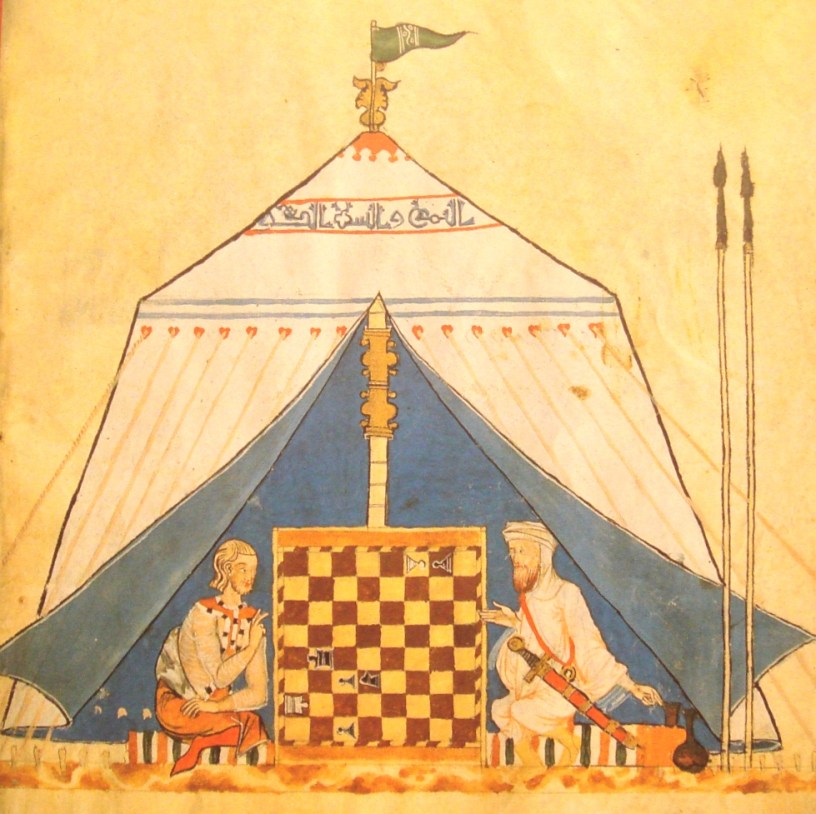
The painful truth: Islamic civilization wasn’t just feared for its military victories — it was resented because it proved itself more just, more capable, and more humane than the world that opposed it.
Introduction
The story we’ve often been told about the centuries-long hostility between Christian Europe and the Muslim world is one of religious conflict, territorial wars, and theological irreconcilability. But this narrative hides a deeper wound — a civilizational defeat that was more psychological than military.
Christian Europe didn’t just hate Islam because of its conquests. It hated Islam because it worked. Because it offered a just, ordered, and spiritually grounded civilization at a time when Europe was struggling through its darkest ages. And perhaps worst of all — because many of the people Islam ruled, even those of other faiths, didn’t want to go back.
A Rapid Rise That Shattered the Christian Worldview
From the death of the Prophet Muhammad ﷺ in 632 CE, the Muslim world expanded rapidly. Within a century, Muslims had taken over vast territories that were once under Christian Byzantine control — including Syria, Palestine, Egypt, and North Africa. Even Spain fell into Muslim hands, becoming the flourishing society of Al-Andalus.
To the Christian psyche, this wasn’t just a military loss. It was a theological crisis. How could the followers of a “false prophet” overtake the lands of the true faith? How could a new people, from the deserts of Arabia, humiliate the heirs of Rome and Jerusalem?
Islam Didn’t Just Conquer — It Governed Better
The most painful part of the Islamic expansion wasn’t the battlefield. It was what came after. Muslim rule in many cases proved to be more just, more tolerant, and more effective than what it replaced.
- Jews, who had suffered under Byzantine persecution, found safety and status in Muslim lands.
- Eastern Christian sects, considered heretics by Catholic and Orthodox powers, were given religious autonomy under Islam’s dhimmi system.
- Markets were regulated, corruption punished, education encouraged, and law applied consistently — often with more transparency than in feudal Europe.
In Al-Andalus, Muslim Spain became one of the most advanced societies in the world — home to libraries, universities, public hospitals, paved streets, and religious coexistence. All while parts of Christian Europe still punished “heretics” by fire and held to a worldview where scientific inquiry was suspect.
Civilizational Envy: The Root of Resentment
What made the Islamic world so threatening to medieval Europe was not just its power — but its moral success.
Islamic civilization was not simply a foreign enemy. It was a superior system, and that was unbearable.
It offered:
- A worldview based on justice (ʿadl)
- A legal system with built-in accountability (sharīʿah)
- A ruler subject to divine law
- A thriving intellectual tradition that welcomed Greek, Persian, and Indian knowledge
- A system of social responsibility, through zakāt and waqf
- Rights for women in property, divorce, and education that exceeded European norms for centuries
Christian Europe, in contrast, was fragmented, feudal, and often brutal. When it looked at Islam, it saw not just a rival, but a mirror — one that reflected its own shortcomings.
Theological Challenge: Islam’s Audacity to Claim Truth
Islam didn’t merely rule. It claimed to complete the Abrahamic tradition — calling Jews and Christians to return to what it saw as the original monotheism.
This was perceived as both heresy and arrogance by Christian leaders.
But worse, the people — from peasants to scholars — often listened. Some even converted. Islam’s emphasis on direct access to God, rational inquiry, and clear law attracted minds across class and culture.
Islam was winning hearts and minds, not just battles. And that, too, had to be stopped.
When Europe Rose Again — It Remembered
The Crusades weren’t just about reclaiming Jerusalem. They were a long-delayed response to centuries of psychological humiliation.
Crusader sources described Muslims as dark, Saracen enemies, often dehumanizing them not only religiously but racially. But this racialization came with awe. They knew they were facing a civilization that rivaled — and surpassed — their own.
And centuries later, when Europe industrialized and colonized the Muslim world, the brutality it unleashed — from the Inquisition to French Algeria to British Egypt — carried the vengeance of the wounded past.
It wasn’t just conquest. It was a civilizational payback.
Echoes in the Modern World
Today’s Islamophobia is not new. It is the modern face of an old discomfort — the fear that Islam still poses a challenge to Western moral and civilizational superiority.
Because even today:
- Islam offers a coherent legal and ethical system.
- It speaks confidently about truth, purpose, and justice.
- It cannot be fully absorbed into liberal secularism without losing itself.
The West continues to fear Islam not because it is weak, but because it refuses to die — and because in its persistence, it reminds the world that there is more than one way to be powerful, human, and whole.
The Need to Decolonize — Racially, Spiritually, and Civilizationally
But the greater tragedy is this: Muslims themselves have internalized much of this fear. We have inherited the West’s distorted mirror and turned it inward.
For over two centuries, Muslim societies have been living in a state of internal colonization. We adopted not only Western borders, governments, and institutions — but also Western racial hierarchies, often without realizing it.
- We began to see light skin as more refined.
- We framed our identities around Arabness, whiteness, or proximity to Europe, while distancing ourselves from our own Blackness, our own indigeneity, our own complexity.
- We erased the memory of when Arabs were Black, when Islam was African, when the center of the ummah was not pale-skinned and Western-facing, but southern, dark-skinned, spiritual, and rooted.
This racial colonization has consequences:
- It splits our ummah along lines of color, language, and status.
- It creates a psychological inferiority complex where our institutions seek Western approval rather than divine truth.
- It distorts our history, making our golden eras seem like myths and our struggles appear as failures.
To overcome Islamophobia is not only to challenge the West’s gaze — It is to free ourselves from the mental prison that taught us to fear our own reflection.
Reclaiming Our Civilizational Self
Decolonization is not just political. It is metaphysical.
- It means restoring the dignity of all Muslims, whether Black, Arab, Asian, or beyond.
- It means rejecting Eurocentric standards of beauty, knowledge, and power.
- It means building institutions, art, philosophy, and governance rooted in our own spiritual vision.
- It means recognizing that our strength never came from wealth or weapons — but from justice, unity, and a relationship with the Divine.
We do not need to become a version of the West to survive. We need to become a truer version of ourselves.
And when we do — when we restore our civilizational memory, racial confidence, and spiritual clarity — then we will no longer be haunted by the West’s fear.
We will be beyond it.
Conclusion
Christian Europe’s hatred of Islam was never just about land or theology. It was about the deep humiliation of being conquered by a people who didn’t just win — they governed with justice.
The enduring resentment wasn’t about losing a sword fight. It was about losing the moral argument. And that loss still echoes today, in every misrepresentation of Muslims, every bomb dropped on a Muslim country, and every time Islam is forced to apologize for itself simply for existing.
But the truth remains: Justice was the blade that cut the deepest.
 One Ummah