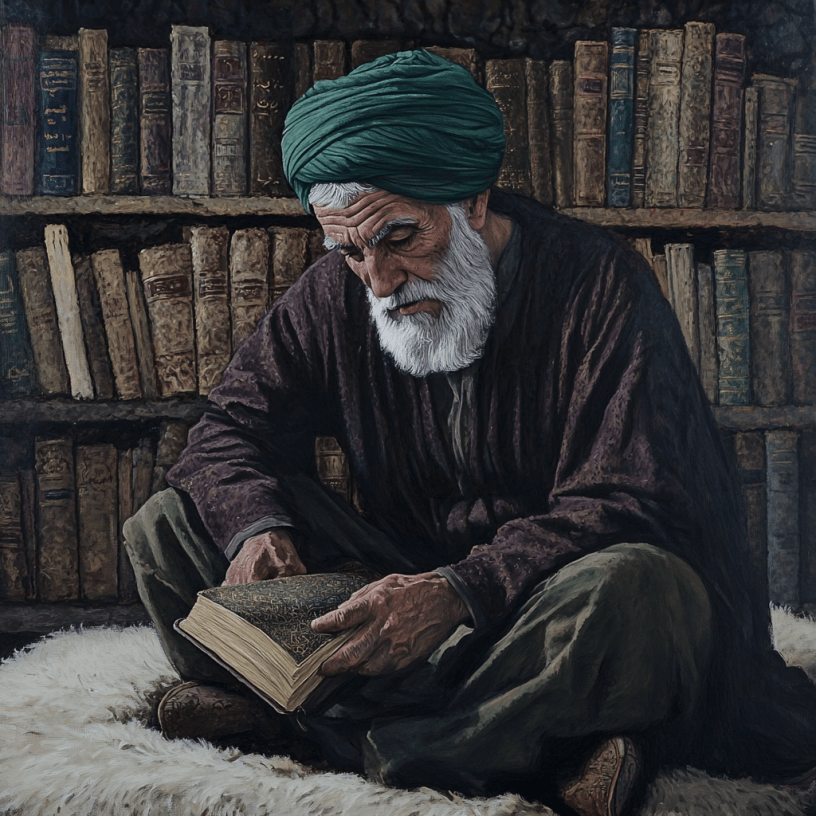
Walk into any mosque in America today and you’ll find a familiar scene: an imam on the pulpit, addressing everything from theology to politics to youth troubles. In the absence of real Muslim political leadership, scholars have become de facto generals, expected to guide not only prayer but strategy.
But here’s the problem: this has never been the way Islam built civilizations.
For centuries, Muslims thrived because they maintained a delicate balance: rulers handled politics, and scholars guarded the moral compass. Salahuddin al-Ayyubi liberated Jerusalem, but he did so in the intellectual ecosystem of Nur al-Din Zengi and advisors like Qadi al-Fadil, who kept his politics tethered to principle. Mehmed al-Fatih conquered Constantinople, but his heart was trained by Akşemseddin, a Sufi who reminded him of humility.
The scholar was not the general. The general was not the scholar. Each respected the other. That was the blueprint.
The Battlefield Today
Now imagine America as a battlefield. On one side, the Right. On the other, the Left. Two massive armies locked in combat. Their weapons aren’t swords or spears — they’re think tanks, lobbyists, universities, and media platforms. Their goal isn’t to capture land but to capture minds.
Muslims, less than 1% of the population, stand in the middle. Small, yes. But history shows small, disciplined forces can tip the balance if they move with clarity. The danger is forgetting they are their own army — and instead becoming foot soldiers in someone else’s war.
The Mistake We Keep Making
Since 9/11, imams and scholars have been pushed forward as community leaders. They testify in Congress, speak to the media, and even dictate political strategy. They’ve become both conscience and commander.
But politics is a grey, messy realm. It requires compromise, alliance, sometimes even dealing with one’s enemies. A scholar who steps into that mud risks losing credibility as a moral guide. Meanwhile, the community suffers, because there’s no class of leaders trained specifically for strategy, negotiation, and governance.
It is the inversion of the classical balance — and it explains much of our paralysis.
What Would the Blueprint Look Like in America?
If Muslims rediscovered that structure today, here’s how it might look:
- Scholars and Sufi sheikhs would form a moral council. They would speak on ethics, set red lines, and remind political leaders of God’s limits. They would never endorse candidates or bargain votes. Their credibility would remain untarnished.
- Political leaders — Muslim lawyers, policy strategists, campaign professionals — would form a civic council. They would negotiate alliances, build lobbying networks, and run for office. They would bear the burden of compromise, but never claim to speak for Islam.
The two councils would meet regularly, like the rulers and scholars of the past, each respecting the other’s domain. The result: politics guided by principle, religion protected from corruption.
Entering the Real Battlefield
The Muslim “army” in America wouldn’t march with banners, but with ideas and institutions. Its strategy would unfold across five fronts:
- Think tanks and lobbying: crafting policies, influencing lawmakers.
- Media and arts: telling stories, shifting narratives.
- Education: shaping how the next generation sees Islam and justice.
- Community service: clinics, tutoring, disaster relief — visible proof of Islam’s contribution.
- Courts: fighting for religious freedom and civil rights through precedent-setting cases.
Muslims don’t need to dominate the armies of Left or Right. They need to become the disciplined minority force that both armies must reckon with.
Why This Matters
In a time when Gaza burns, when Islamophobia resurges, when moral confusion spreads in society, Muslims cannot afford to be pawns. They must learn again what their ancestors knew instinctively: that scholars and rulers must remain distinct, yet bound together in respect.
The battlefield is here. The armies are massive. But Muslims, if they remember their blueprint, can stand as an independent force — small in number, but decisive in impact.
And just as in centuries past, the world may come to respect Islam not for its size, but for its balance: rulers who navigate the storm, scholars who guard the compass, and a community that refuses to fight under anyone else’s flag.
 One Ummah